The Psychology of Small Spaces: Why Tiny Homes Feel Bigger
- Anja Kodrič
- Apr 25
- 3 min read
Updated: May 8
The human brain reads small spaces through light, visual flow, and a sense of openness rather than square footage. When we enter a tiny home, our eyes instinctively follow bright surfaces, continuous lines, and points where the room visually “opens up.” This is why tiny homes feel spacious when the visual flow is uninterrupted, when there are no unnecessary breaks in the layout, and when natural light reaches deep into the interior. The perception of spaciousness in small homes is driven by architectural psychology, not by the actual size of the space.
Colors, Proportions, and Rhythmic Design
Colors and proportions are some of the most powerful psychological tools in small‑space design. Light tones diffuse natural light and create an airy feel, while darker accents add depth and a visual anchor.
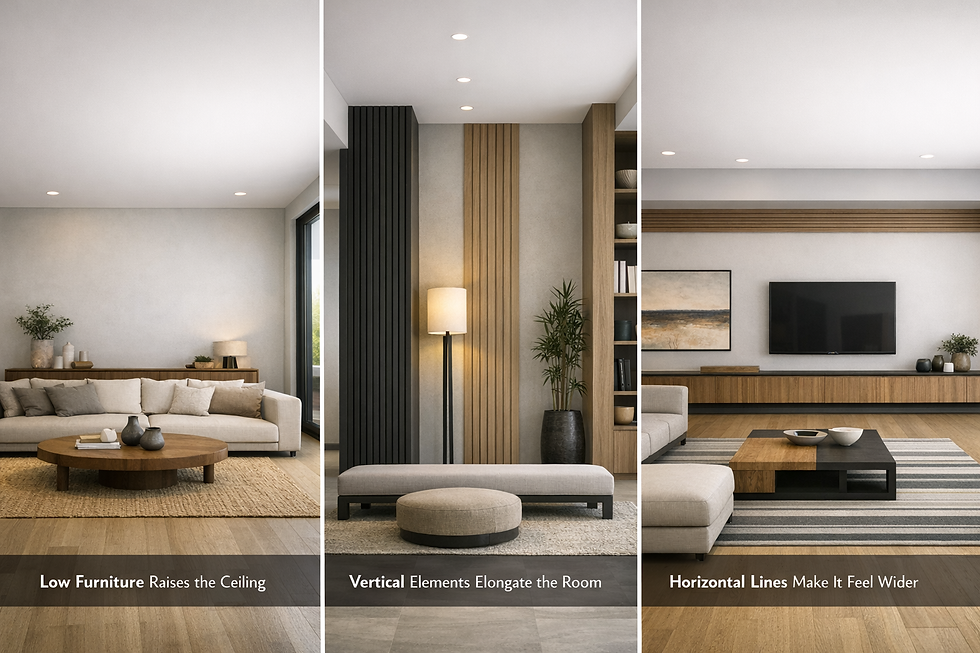
Proportions act like architectural mathematics: low furniture visually raises the ceiling, vertical elements elongate the room, and horizontal lines make it feel wider. Rhythmic design — the repetition of materials, colors, or shapes — brings visual order and reduces clutter. When the rhythm is consistent, the brain reads the tiny home as a harmonious whole rather than a series of small, disconnected zones.
How Architecture Manipulates Perception
The architecture of tiny homes is essentially a subtle exercise in perception. With the right design strategies, a small floor plan can feel significantly more spacious without increasing its actual size:
Visual continuity — open sightlines, concealed transitions, and minimal detailing create a seamless flow.
Directed views — windows that frame outdoor views generate the impression of additional “space” beyond the walls.
Layers of light — natural light adds volume, indirect lighting softens edges, and accent lighting introduces depth.
Material consistency — using the same materials, connect the zones into one whole space..
When these techniques work together, a tiny home becomes a form of optical architecture — a space that feels larger than its physical dimensions.
The Emotional Impact of Well‑Designed Small Spaces
Well‑designed tiny homes have a surprisingly strong emotional impact. When a space is logical, bright, and harmoniously organized, the brain naturally triggers feelings of safety, calmness, and control. In small spaces this effect becomes even stronger, because every architectural element is closer, more direct, and more influential.
Sense of safety

Small, well‑designed spaces create a feeling of refuge. Clear transitions, visually pleasant materials, and evenly distributed light activate the prospect‑refuge effect: a person can see the entire space while feeling protected. This is one of the key reasons tiny homes often feel more “home‑like” than larger houses.
Sense of control over the environment
In small homes, every element is within reach, creating a psychological sense of manageability. When the layout is intuitive, storage logical, and lighting well‑modulated, a person feels “in control” of the space. This increases satisfaction, reduces stress, and strengthens the feeling of home.
Calmness and mental clarity

Visual order, material rhythm, and the absence of unnecessary elements reduce cognitive load. The brain spends less energy on orientation and interpretation, which increases mental clarity. A well‑designed home functions like architectural meditation — a space that quiets the mind and supports focus.
Emotional connection to the space
Because tiny homes feel more intimate, users form an emotional bond with the space more quickly. Architecture that respects proportions, light, and material logic creates warmth and a sense of belonging — one of the strongest psychological effects of well‑designed small spaces.
When these elements come together, a tiny home becomes more than functional; it becomes an emotionally intelligent environment that supports wellbeing, calms the nervous system, and creates a psychological sense of spaciousness.